

The Humanosh Emergency Medical Team is a civilian medical team operating in areas where people are experiencing real loss of access to healthcare – after floods, during conflicts, and in disaster situations. We operate quickly, without unnecessary structures, focusing on what matters most: providing direct patient care.
It is a team of doctors, nurses, paramedics, and logisticians who can enter a difficult environment and begin working immediately – with their own equipment, medication, and resources. Without delay for establishing full infrastructure.
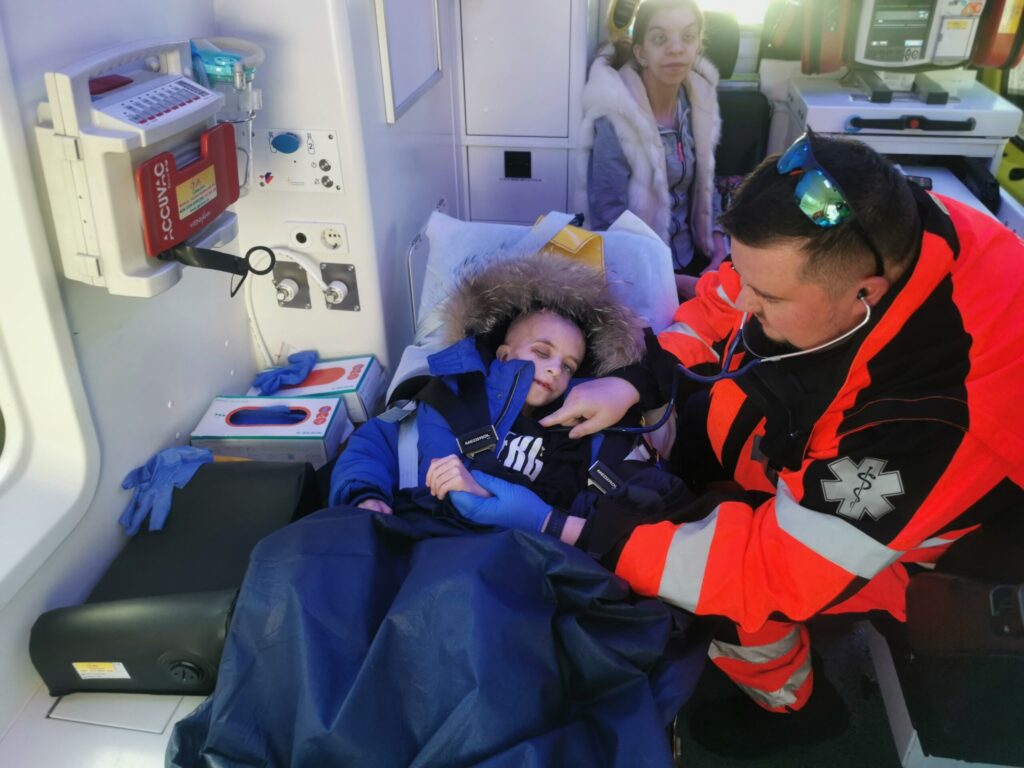
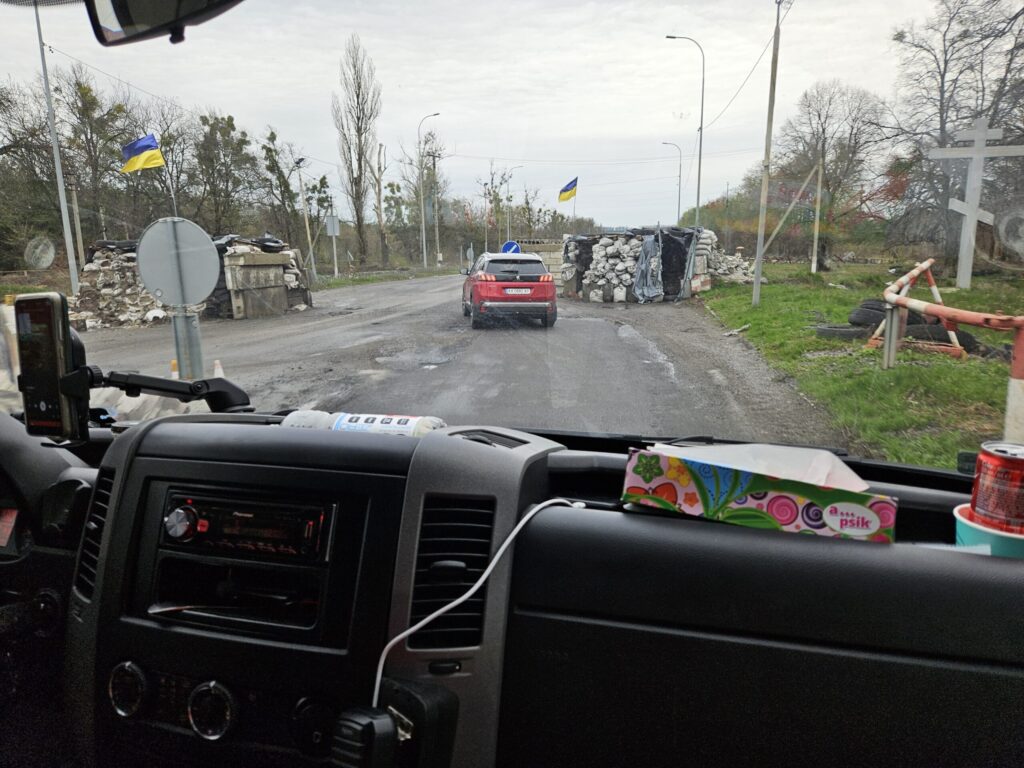
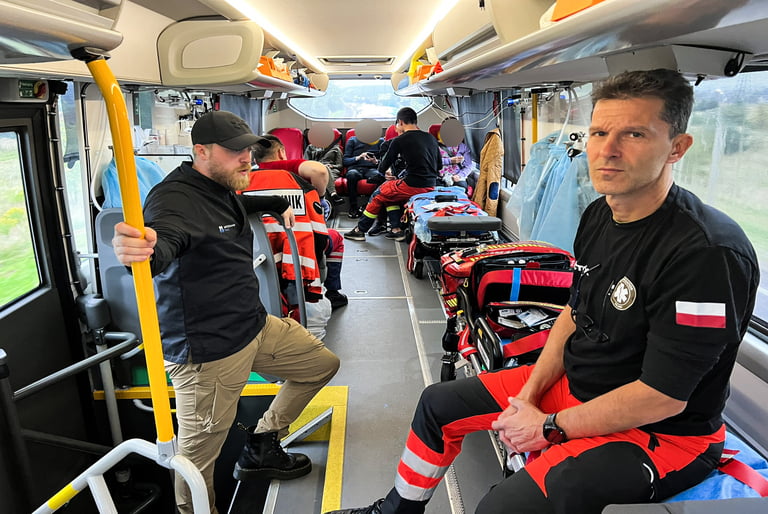
Since 2022, we have been operating in Ukraine – providing treatment, diagnostics, support for the chronically ill, home visits, and medical transports. Over 2,200 patients have been evacuated, thousands of consultations have been provided, and a continuous presence has been maintained in areas where the healthcare system has ceased to function.
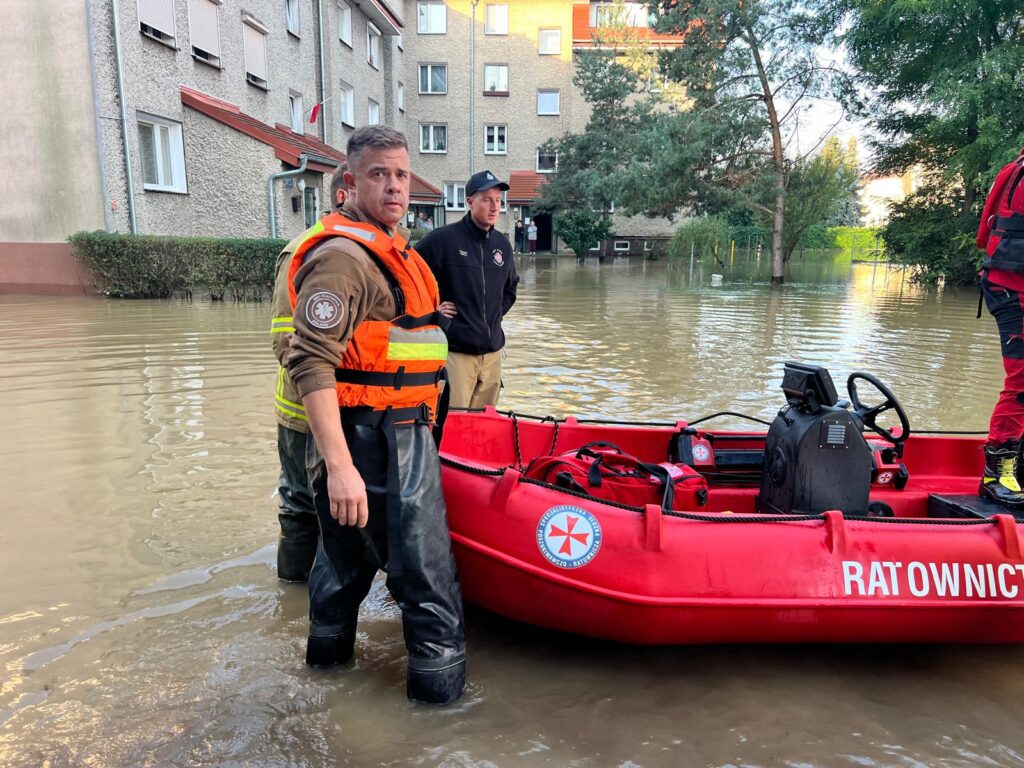
In Poland, we operated, among other situations, during the floods of 2024. Within 24 hours, we deployed round-the-clock teams in four locations simultaneously. This was purely operational work – providing medical support, access to isolated areas, and supporting the rescue system.
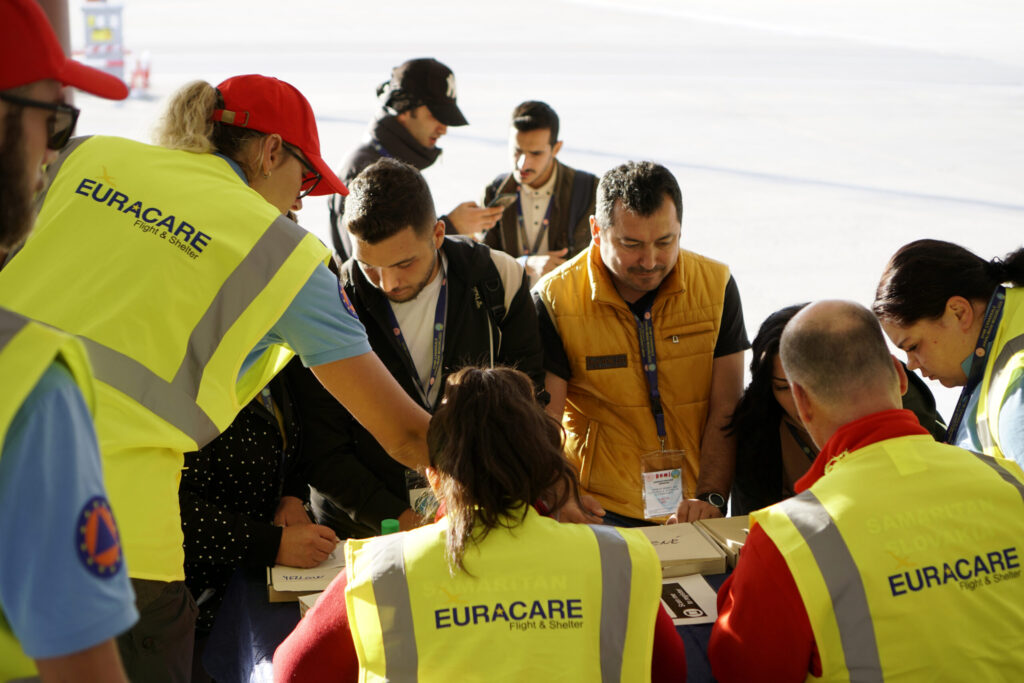
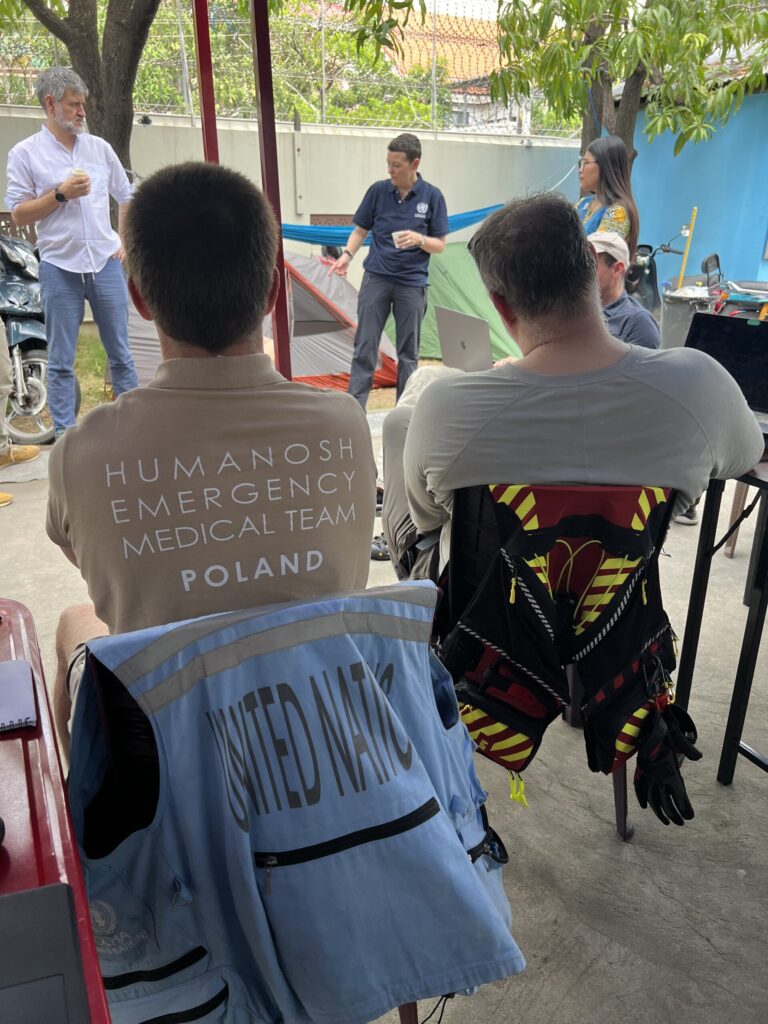
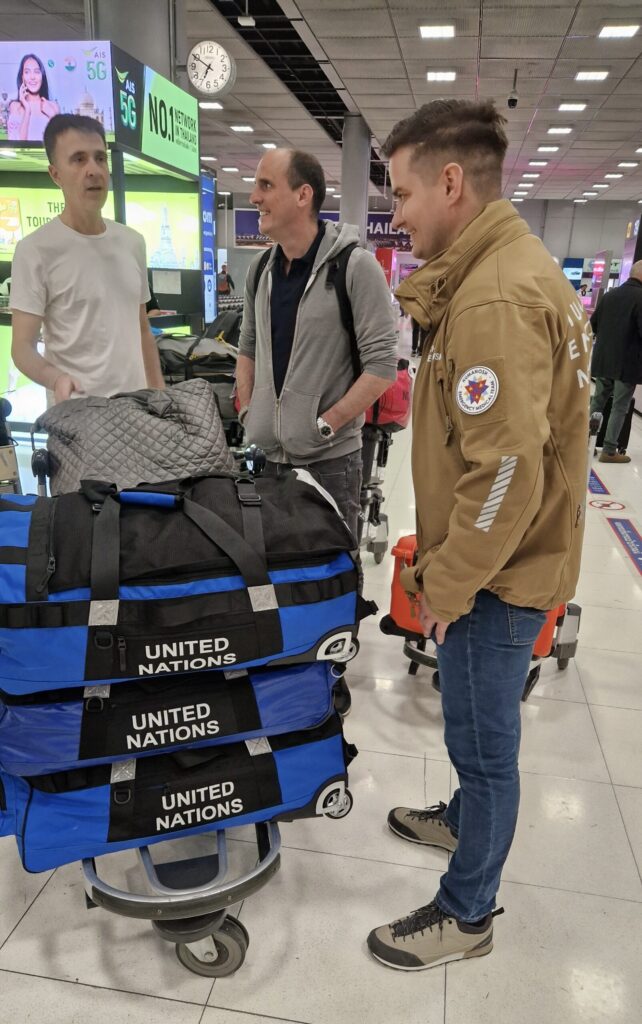
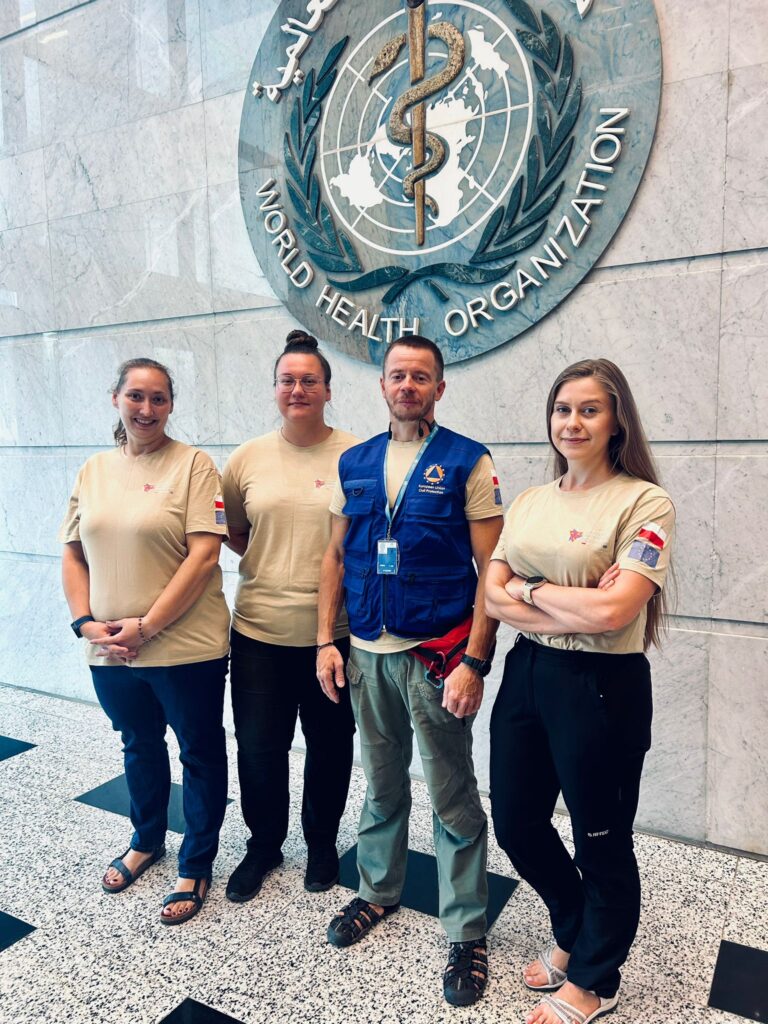
In parallel, our people operate within international structures – the WHO, the UN, and the EU Civil Protection. We were present, for example, during the earthquake in Myanmar and in the operations related to Gaza. Not as observers, but as part of the aid coordination system.
Today, Humanosh EMT is one of the most experienced teams of its kind in the region. In September 2026, we will undergo the WHO certification process as EMT Type 1 – a formal confirmation of what we have been doing in practice for years.
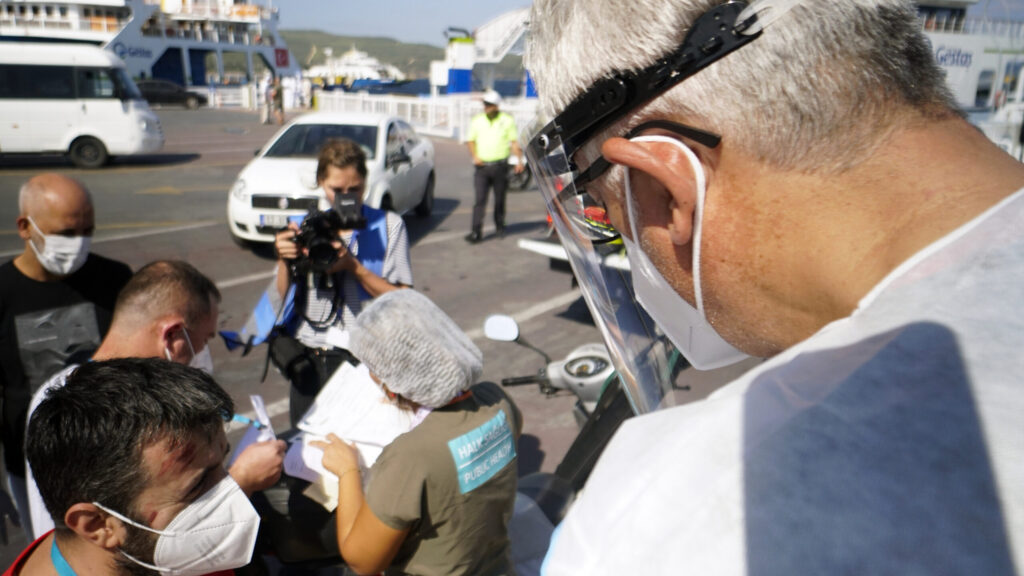
Our operations extend beyond medicine. We combine it with humanitarian aid — providing medicine, equipment, food, and hygiene products. In winter, we provide heating, sleeping bags, and basic survival supplies. In many places, this is the only support people receive.
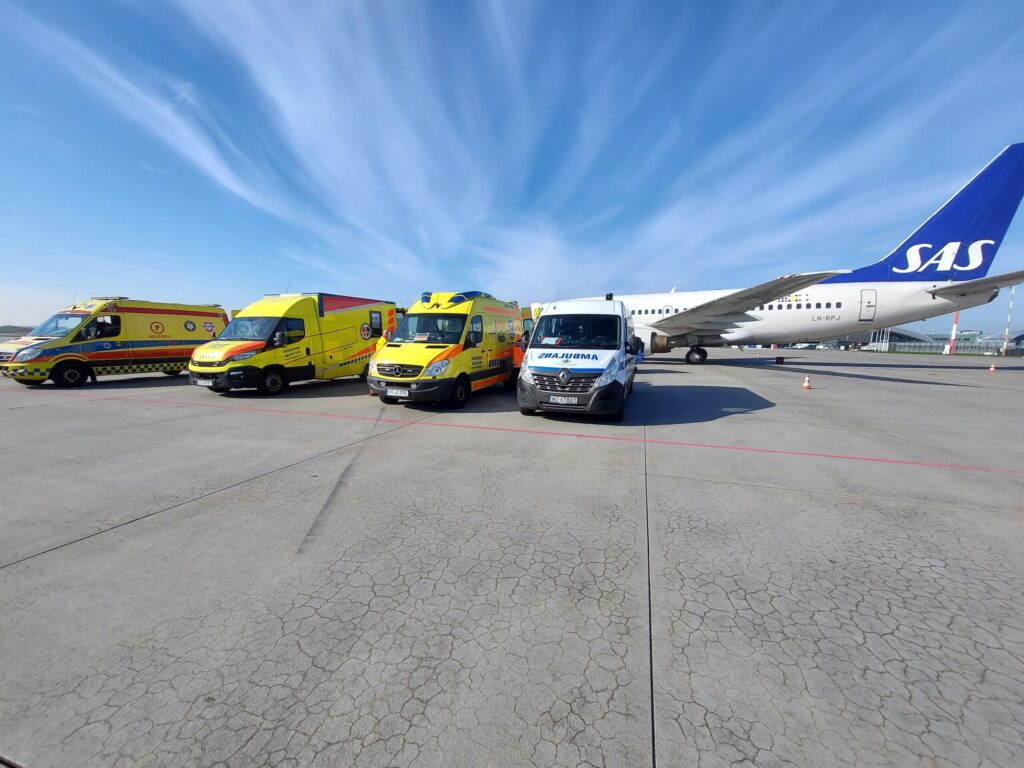
All of this relies on real assets – people, equipment, and readiness. We can start operations in a very short time and sustain them for an extended period without external support.
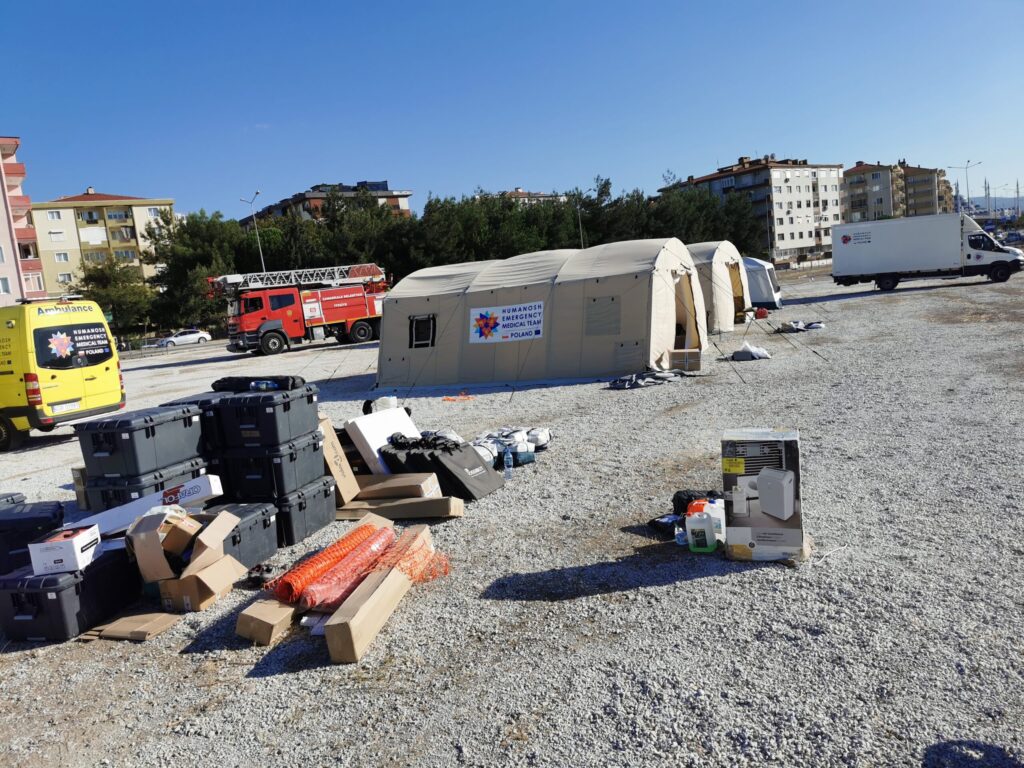
To develop this further, we need reliable partners. Not one-off initiatives, but long-term cooperation – financing, hardware, organization. This allows us to be faster, more dependable, and reach where others cannot.
FAST (Fast Assessment Support Team)
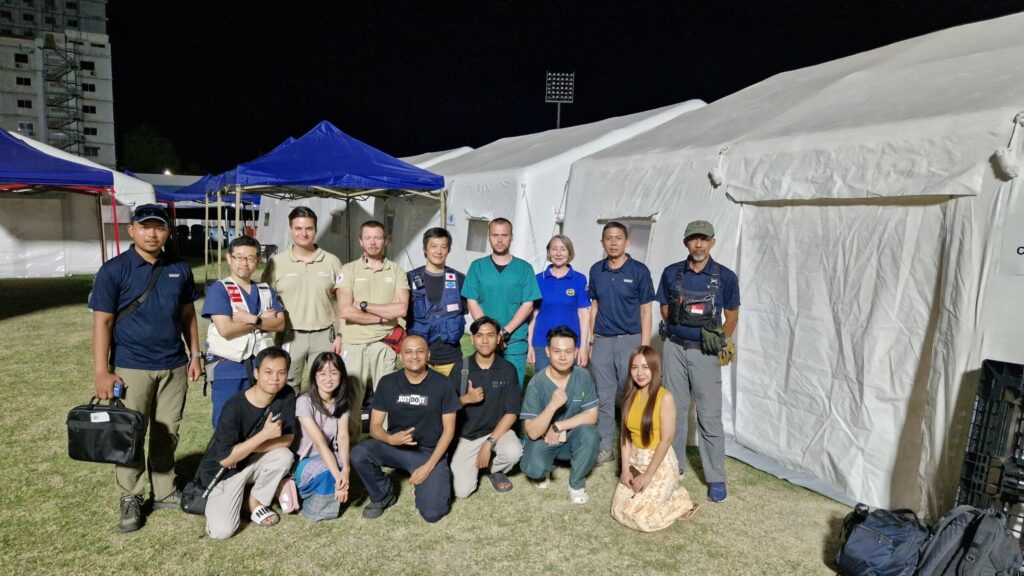
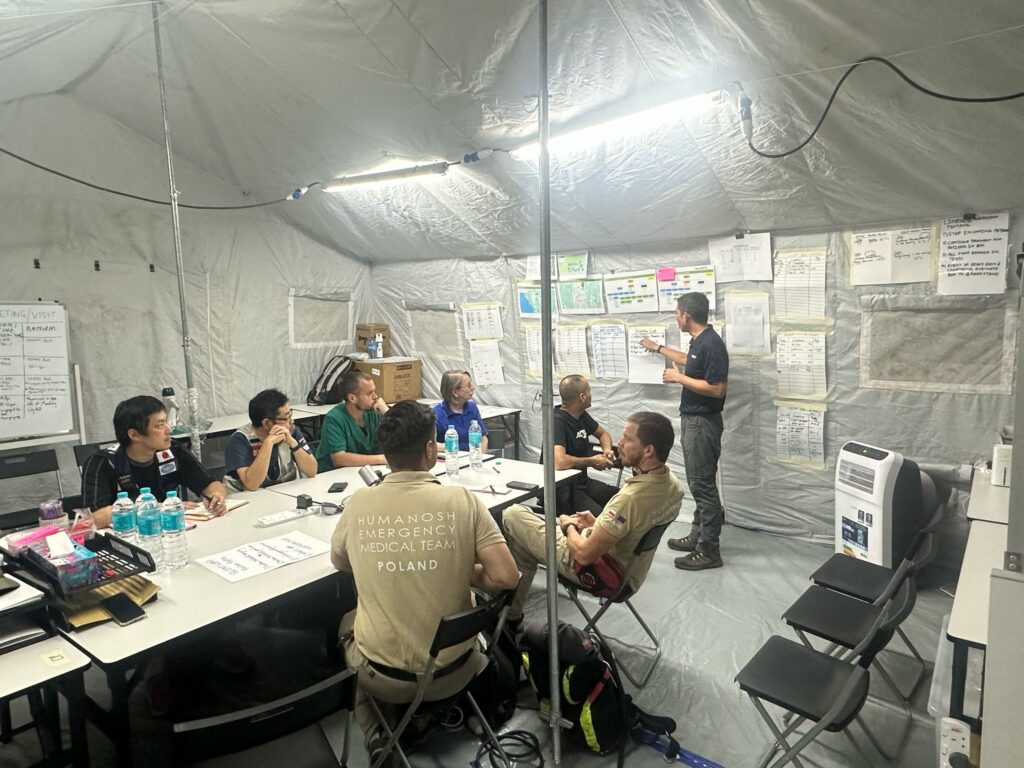
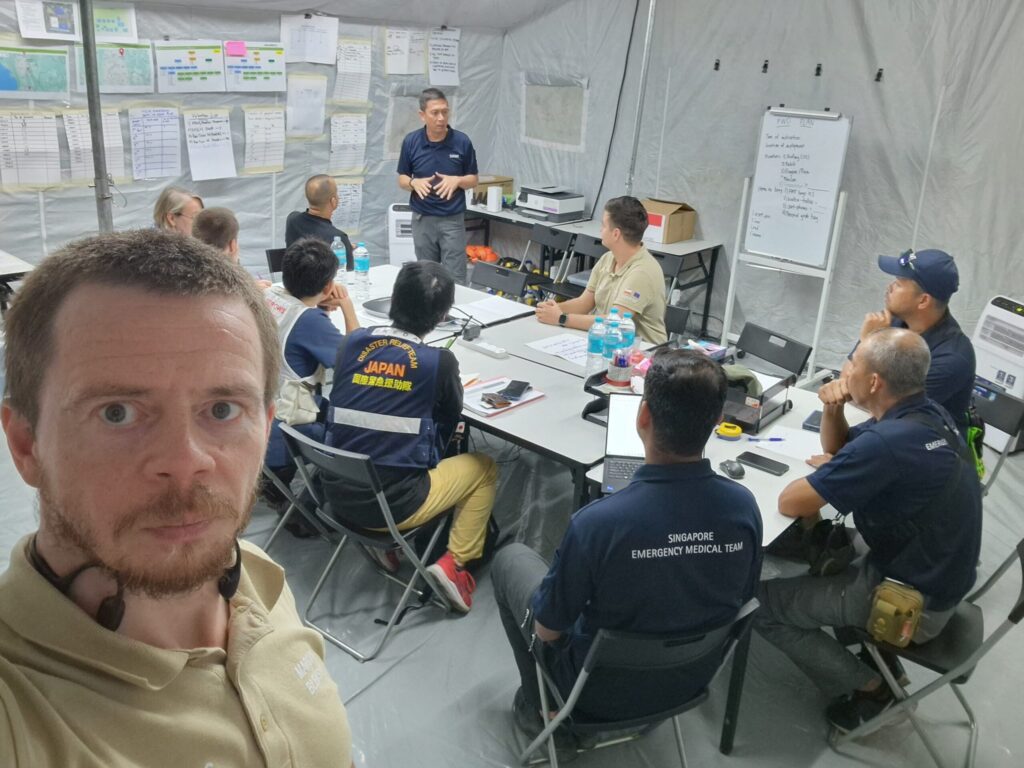
Humanosh FAST (Fast Assessment Support Team) is our rapid response team in the first hours after a disaster. Small, mobile, and fully self-sufficient, its mission is to quickly assess the situation, gather field data, and initiate coordination of medical operations.
In practice, this means working directly in the chaos of the initial phase—liaising with local authorities, hospitals, and services, preparing analyses, maps, reports, and recommendations for further action. FAST can also support or co-create a coordination system (e.g., EMTCC) if one is missing or inoperative. This model proved successful, for example, after the 2025 earthquake in Myanmar, where the team was on site within a few hours and worked within UN structures from the outset.
FAST primary goals
- Conducting a Rapid Needs Assessment.
- Supporting the establishment and operation of the EMTCC – both as an independent team and as a support element for local or international coordination.
- Ensuring full logistical and technical self-sufficiency thanks to ready-made hardware modules and communication systems.
- Providing operational information, data analysis, preparation of SitRep, maps and recommendations.
- Preparation of operational documentation – CONOPS, SOPs and MEDEVAC plans.
- Ensuring interoperability and cooperation with WHO, UNDAC, OCHA and EUCPM.
Field Hospital – EMT 1 Mobile and EMT 1 Fixed
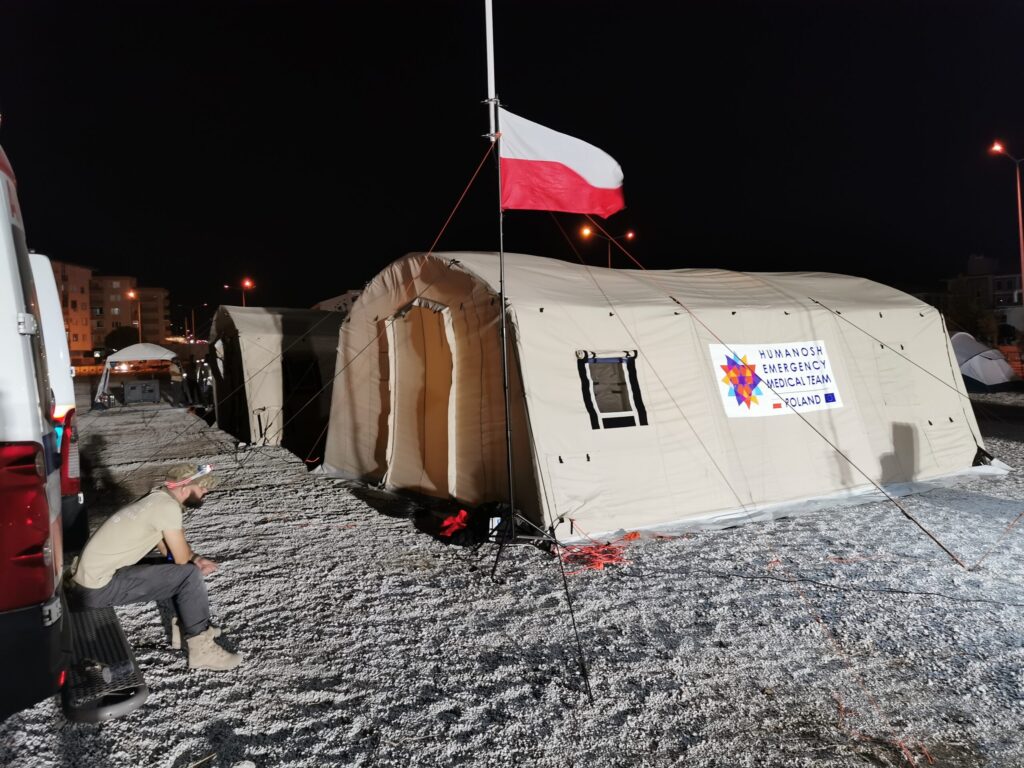
EMT 1 Mobile – Type 1 Mobile Clinic
The EMT 1 Mobile project aims to create a medical resource compliant with WHO EMT Type 1 Mobile standards. The unit will be operational within 48 hours of activation, with the ability to quickly relocate.
Core characteristics:
• modular tent structure,
• 4 observation beds,
• min. throughput of 50 patients per day,
• conducting resuscitation and minor surgical procedures.
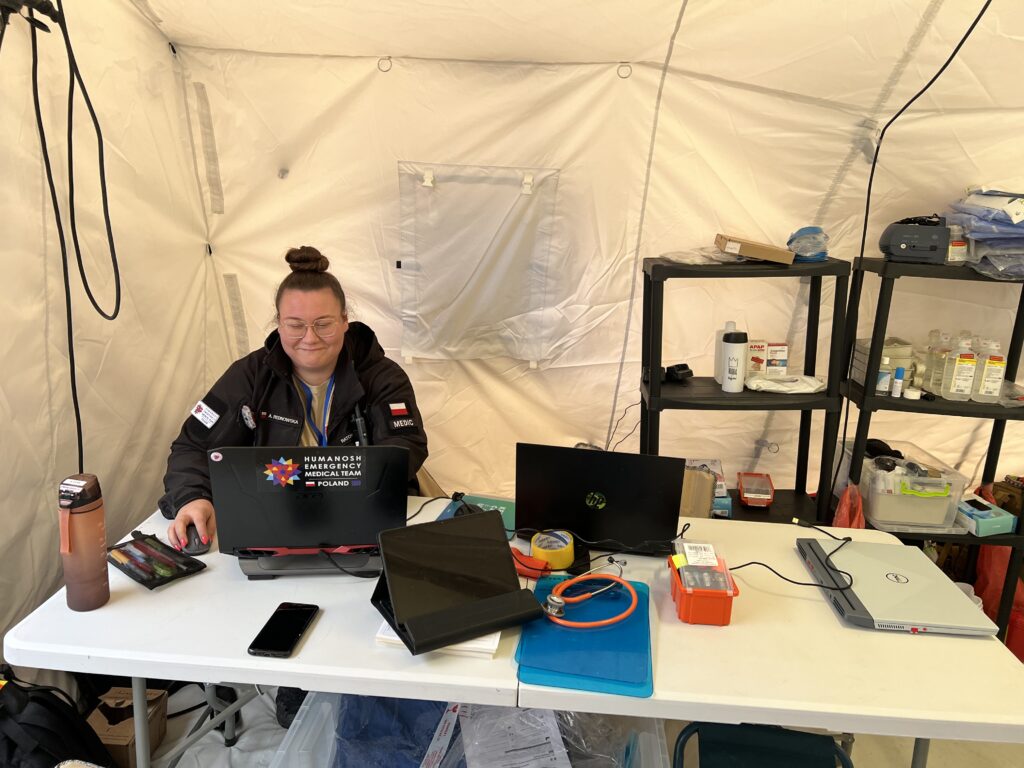
EMT 1 Fixed – stationary field unit
In parallel, the Foundation is developing the EMT 1 Fixed project – a larger, stationary field unit capable of replacing the functions of a hospital emergency department in a crisis situation.
Core characteristics:
• semi-permanent and extendable tent or container base
• 10 observation beds,
• 2 resuscitation stations,
• integrated treatment, diagnostic and pharmacy facilities,
• min. throughput of 100 patients per day,
• self-sufficiency for at least 14 days.
Both assets – Mobile and Fixed – create a complementary and scalable medical response system, capable of operating both in the first hours of a crisis and in longer stabilization operations.