


Sława always gave the same answer to that question. When asked if she hadn't been afraid, she would shrug: "What is there to be afraid of? A person can be killed only once."
Before the war
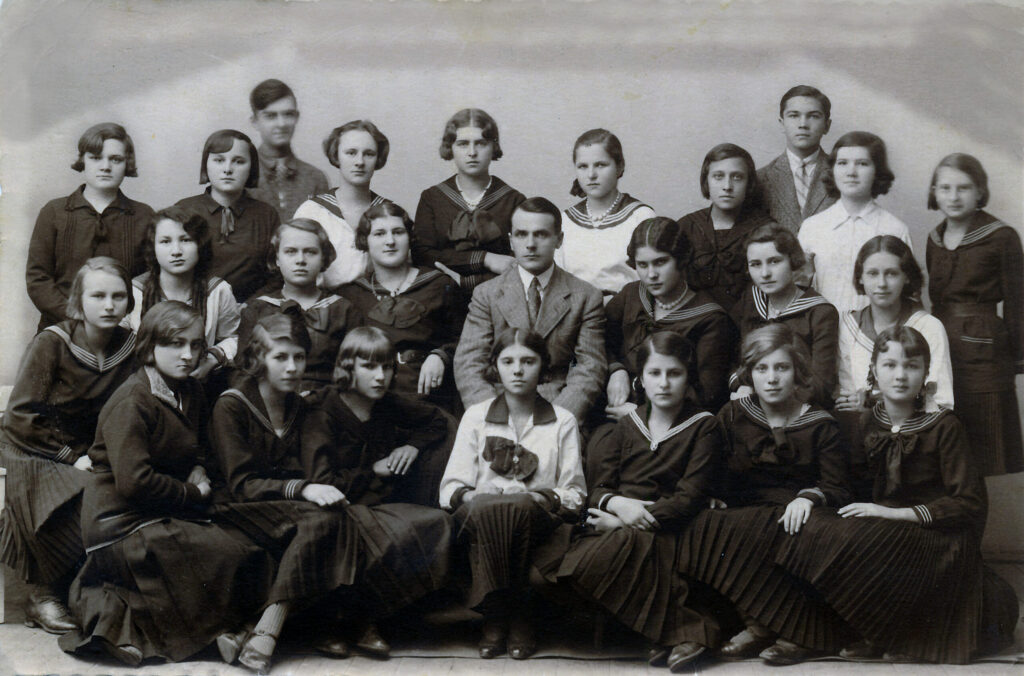
Sława Skolska was born on February 9, 1919, in Borysław, the second child of Ewa and Jarosław Skolski. It took a long time for her to get used to her name; she would call out: "Who the hell names a girl after her father!" She attended school in Drohobycz and passed her final exams in 1937. She had an older brother, Zbyszek, and a sister, Danusia, who was two years her junior. She wore thick glasses, and her friends called her "Blind Tiutia" or "Kubuś." No one suspected that this nearsighted, stubborn girl would become one of the most steadfast figures of wartime Drohobycz.
The outbreak of war found Sława in Gdynia; she was actually returning home on the very last day of August 1939. Her brother Zbyszek went off to war, joined Anders' Army, and never returned to communist Poland. The family lived through the Soviet occupation, followed by the German occupation.
Occupation
In June 1941, following the outbreak of the German-Soviet war, Sława found herself stranded in Lwów, where she had gone for an acquaintance's wedding. On her way back, she witnessed the first scenes that would be forever seared into her memory: retreating Russians murdering everyone in their path, and Jewish men—beaten with rifle butts—forced to carry bodies out into the streets. The Germans were marching in, shattering the established order of the world.
On her own street in Drohobych, she saw a soldier toss a small child onto the back of a truck, while the mother—with an infant at her breast—desperately tried to climb up after it. She returned home sobbing uncontrollably. The next day, a little girl speaking to her own reflection in the windowpane: "You didn't like bread with butter, but now you're eating just the crusts and they're fine." A little further on, a crowd had gathered in the street. A Jewish family, knowing the Germans would soon come for them, had committed collective suicide by poisoning.
At a friend’s home, Sława met Izydor Wołosiański—known to everyone as Izek—who was eleven years her senior. It was he who introduced her to the circle of Jewish friends who gathered at the Zajfert family home on Szaszkiewicza Street. Among them was Ania Lindt, a two- or three-year-old girl with red hair and a restless, precocious nature. She used to say of herself: "Red as a tomato, ginger as a carrot."
When the Germans began systematically searching houses, Ania’s parents asked Sława to take the girl in. Sława, who was herself somewhat reddish-haired, simply placed the little girl in the window. Her reasoning was simple: the Germans would never suspect anyone of putting a Jewish child on public display. The ruse worked. Ania survived.
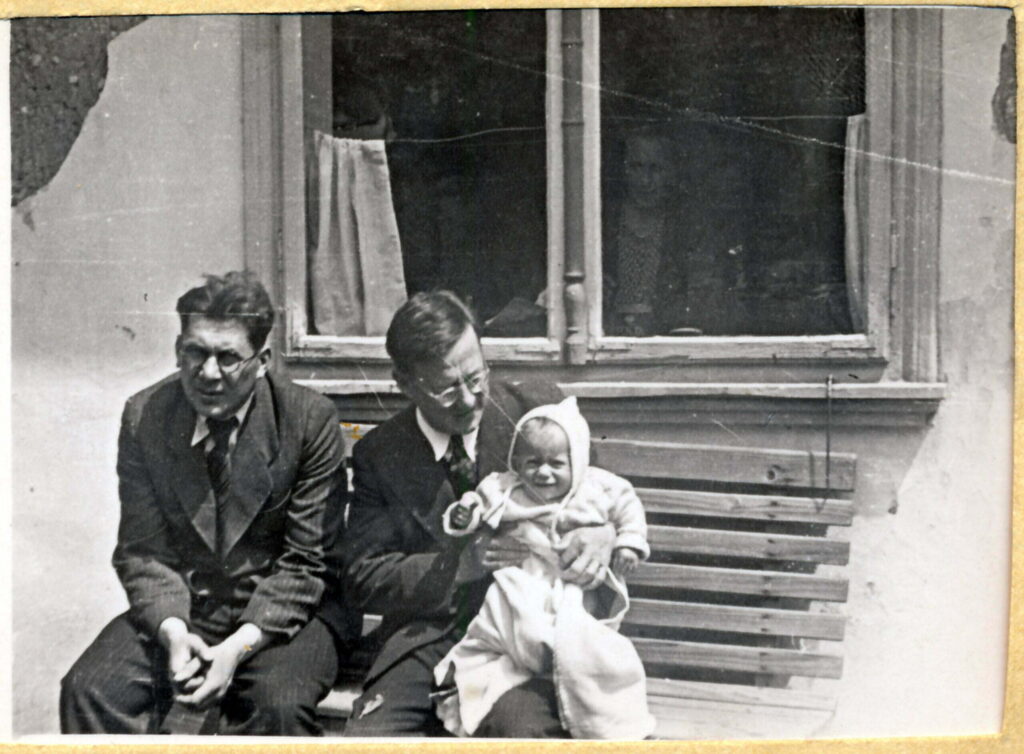
A ghetto was established in Drohobycz in 1942. Sława and Izek decided to take initiative. Whenever another "Aktion"—a roundup or deportation—began, Izek would hide Jewish acquaintances in the cellar of the workshop where he worked. They would bring them food for two or three days; she would wait in the courtyard while he went down with the food.
Before long, these rescue efforts ceased to be merely sporadic. Families who did not want to—or could not—enter the ghetto (primarily children and the elderly, as the latter were killed immediately) required permanent hiding places. The tenement house at 9 Szaszkiewicza Street was owned by the Zajfert family. Mr. Sztok—a carpenter and parquet floor specialist—constructed a hiding place there together with his wife, two children, and nanny; it consisted of a concealed passageway and an underground chamber, the entrance to which was masked within the kitchen’s parquet flooring. False "Aryan" papers were secured for the younger family members so they could leave the area. The elder Zajferts, however, went to the ghetto and perished there. Instead, Mrs. Zajfert’s sister—Mrs. Hendel, an accountant—took refuge in the hiding place with her daughter and her husband, who spoke no Polish at all. They were joined by Mr. Sztok, his two young daughters, and their housekeeper, as well as Mrs. Rosenberg and her daughter Hela—who had witnessed the Germans shooting her father right before her eyes. Sława had the original doorway between the office and the kitchen walled up specifically to ensure that no outsider would notice it.
Mrs. Hendel was supposed to report to the ghetto every day, but she didn't; instead, she spent the night at the Wołosiańskis' apartment, where she used the bathroom and had a corner of her own from which she could communicate with her husband and daughter, who were hiding in the cellar. She was the one who would wait for Sława and Izek in the office whenever they returned home, ready to tell them immediately if anything had happened.
A German man, the *Treuhänder* Herzer, lived in the building. This was a paradoxical advantage: the Germans rarely searched for Jews in houses where their own compatriots were quartered. He did not lead an exemplary life—he had a mistress—so having non-German neighbors suited him; indeed, he was on excellent terms with Sława. Yet that same familiarity revealed just how dangerous a man he could be: he kicked a caretaker to death for opening the gate too slowly, and personally led the stableman who tended his horse to the execution site in the ghetto. Herzer suggested that Izek bring his father and sister to the neighboring apartment. This proved impossible, so Izek and Sława decided to get married and occupy the flat themselves. They were married on January 6, 1943. Fourteen people were already hiding in the cellar beneath their new apartment.
Living in the same building—under "Aryan" papers—was Mrs. Halina Ekierska, herself a Jew, along with her husband, who was gravely ill with tuberculosis and whom she was hiding separately within her own apartment. Sława suspected something was amiss when she heard terrible coughing through the wall at night. When Mrs. Ekierska finally confessed the truth, Izek took the sick man to a doctor, but it was already too late; the husband died that very night. Mrs. Ekierska simply tossed them the keys and said, "Bury him!" before vanishing for three days. The night they buried him was one of the most harrowing Sława ever experienced.
Life in the Cellar
Over the following months, the number of people in the cellar grew. From time to time, Izek would return home with a crestfallen look; Sława knew this meant new tenants. The occupants would then dig up the earth in the cellar and hide it between the floorboards, making room for the next arrivals. The space was so cramped that adults could not stand upright, and children struggled even to rise; they lived lying down.
Sława went shopping every day, visiting a different store each time to avoid arousing suspicion. No one knew how many people she was actually feeding; she even told acquaintances she was buying supplies for her parents or a friend. Her husband would take the horse-drawn cab to the train station and return with sacks of groats and flour. The supplies would disappear into the cellar that very same day. The tenement building had gas and electricity, but most of the heavy cooking took place in the Wołosiańskis' kitchen. During the day, those in hiding slept; at night, the cellar came alive—people washed, ate, played cards, and argued. One of the men—an informal captain, who saw himself as the arbiter of life and death for the others—once came upstairs to tell Sława that he had passed a death sentence on a fellow occupant named Dziumek. She gave him a curt reply: "Doctor, I am saving you all from death, and you’re telling me you’ve sentenced someone to die?" No harm came to anyone in the end, but the cramped conditions and fear took their toll; arguments and tension were a daily occurrence.
On August 4, 1943, amidst all that secrecy, Sława gave birth to a daughter, Ania. About thirty people were staying in the cellar at the time. The baby became an unexpected warning system: when nothing was amiss, Sława would hum lullabies to her daughter, and those hiding below knew they could rest easy. Whenever she stopped singing, they immediately became anxious.
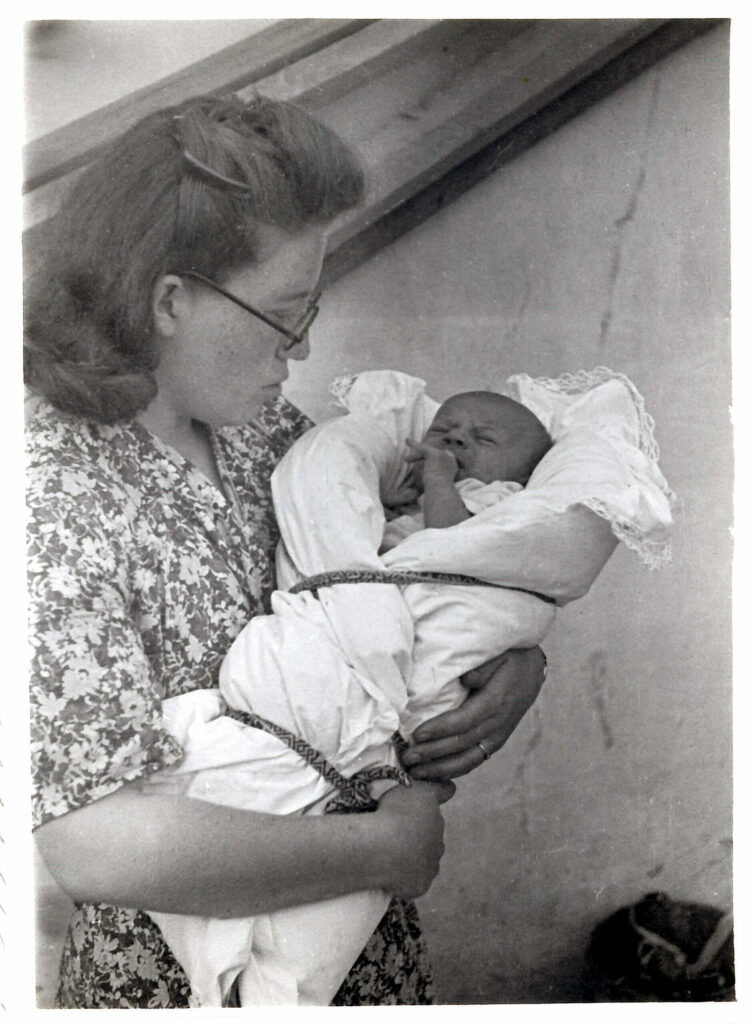
Shortly thereafter, two groups of people in hiding—unwittingly digging from opposite sides—broke through to one another. Mutual astonishment ensued on both sides of the wall. Thus, the final total was reached: thirty-nine people, including seven children, for twenty-two months, from September 1942 to August 1944.
Towards the end of their time in hiding, one of the women in the cellar turned out to be pregnant. The Soviet front had already reached the outskirts of Tarnopol but had stalled there for many months. The baby was stillborn and was buried between the cellar's two floor layers. Fortunately, despite the conditions, the delivery proceeded without complications, as there were three doctors among those in hiding.
However, the most harrowing childbirth was endured by Hela, Sława’s closest wartime friend. After the delivery, her placenta failed to detach; she developed a severe fever and went blind. The doctors hiding in the cellar refused to operate because they lacked the necessary instruments, and even though Sława offered to procure them, she was still turned down. She then thought of a certain Watenrot—a gardener with good connections among the Germans—and persuaded him to arrange for a doctor from outside to come in. The operation was nearly aborted at the last moment when the summoned doctor got cold feet, but Hela managed to make it home on her own, and the procedure was finally performed. She regained her sight a little over a fortnight later.
For a time while pregnant, Sława also worked at an iron foundry. At her husband’s request, she issued *Ausweise*—employment certificates that protected the bearers from deportation—always signing them with her maiden name, Skolska, so they could not be linked to the Wołosiańskis. She does not know how many she issued in this way.
It also happened that a man identifying himself as Stefan—a Polish *Cichociemny* (Special Operations Executive agent) dropped in to reconnoiter the Polmin refinery in Drohobycz, one of the largest in Europe—found his way to their apartment. A pre-war friend of Izek’s brother, he simply asked her to hide a briefcase containing documents in a compartment beneath the daybed, right next to the hiding place where people were concealed. They agreed on a signal: a greeting for "Stefan" during a BBC broadcast. The signal was indeed transmitted. Years later, by then living in Wrocław, the same man tracked Sława down at her new address—if only to say hello.
Throughout all this, one inviolable rule applied: never accept money for it. When a friend who was also hiding Jews once came with a proposal from a wealthy jeweler from Lwów—offering a bag of diamonds in exchange for shelter—Sława refused without hesitation. She later explained simply: the number of people in hiding had already reached thirty-nine, there was no more room, and besides, she did not want anyone’s money. She wanted to give people—and herself—life.
Liberation
On August 4, 1944—exactly on her daughter Ania’s first birthday—the Russians stormed into Drohobycz. Twenty-two months of hiding in a cellar came to an end. Thirty-nine people, who had spent that time lying down in darkness and under the constant threat of death, lived to see their liberation.
Survivors
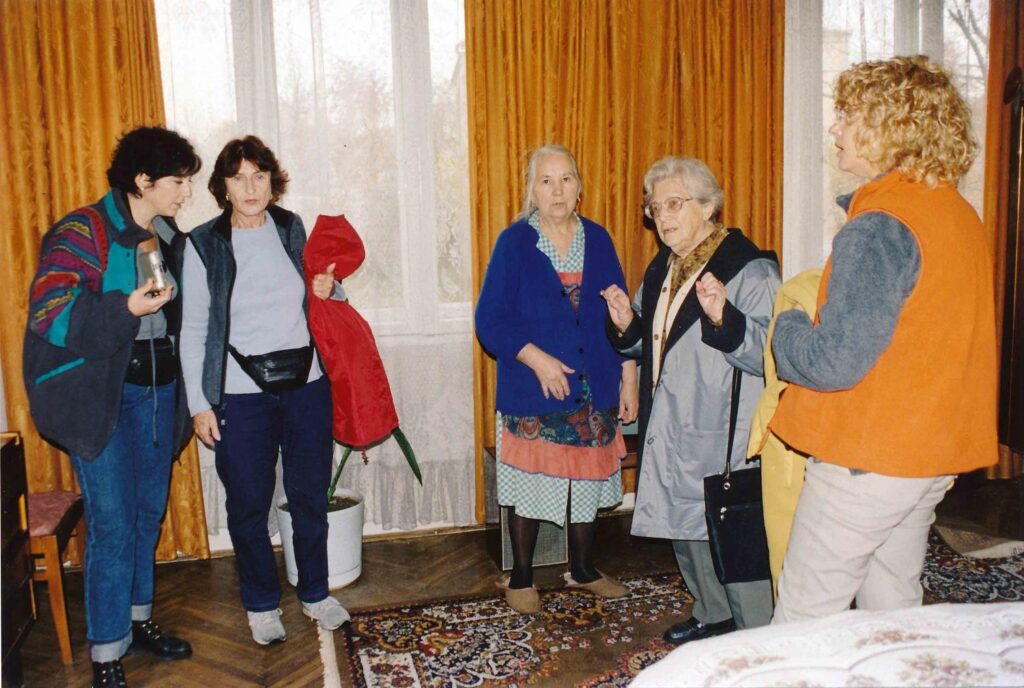
Among the thirty-nine people who survived thanks to Sława and Izek were members of the Hendel and Sztok families, Mrs. Rosenberg and her daughter Hela, and little Ania Lindt—the very same girl whom Sława had once placed in the window to hide her in plain sight. Each of these individuals has their own distinct story of survival and their own post-war history.
A complete register of the thirty-nine survivors, along with their biographies and family histories, can be found on the page The Story of the Survivors.