

Bezalel (Calek) Artur Hendel was born on August 14, 1887, in Lipno—located in the Russian Partition at the time, and in present-day Poland—into a devout, modest Jewish family. As a young man, he trained to become a cantor (a prayer leader) and a kosher butcher; to this end, he visited his older brother, who was already working as a butcher in Zagreb. In the early 1920s, he emigrated to Berlin, where he initially served in both capacities—as a cantor and a butcher.
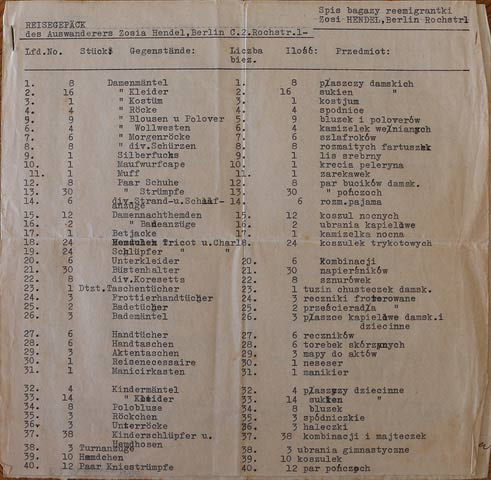
On the night of October 28, 1938, as part of the *Polenaktion*, Artur was expelled to the town of Bentschen (now Zbąszyń). Believing that as a respectable German taxpayer no harm would come to him, he had refused to go into hiding beforehand, unlike many of his friends. His family had no way of contacting him. Two weeks later, *Kristallnacht* took place in Berlin, where he had left his wife and daughter. After witnessing the looting of a neighboring shop, his wife Zosia decided to sell the family business and apply to emigrate to Great Britain or Palestine. She sent all their possessions to Hamburg and paid in advance for shipment to whichever country would grant them refuge. Hadassa stopped attending school and was temporarily placed in the care of her mother’s sister, Aunt Regina.
In June 1939, Artur managed to return to Berlin. While waiting for immigration documents, the family decided to go to Drohobycz to stay with Zosia’s parents. They never received permission to emigrate.
In 1941, following the German attack on Russia, a ghetto was established in Drohobycz. The family escaped the initial roundup because they had not been included in the census of residents. They met Izydor Wołosiański through Seifert, the employer of Zosia’s brother. They were among the first occupants of the cellar.
Shlomo Wygodny
“A good part of us moving is that I have to open old boxes and look at their content. And look what I found – my grandfather Calek (Bezalel, Artur) worked in the Seifert factory at Szaszkiewicza 9. So, he had lots of documents about it – and they all survived the war. I scanned these work permits, that include the Szaszkiewicza address. The first is actually “invitation” to the police – actually an “Action” to deport some of the Jews to camps. Luckily he probably escaped it”.
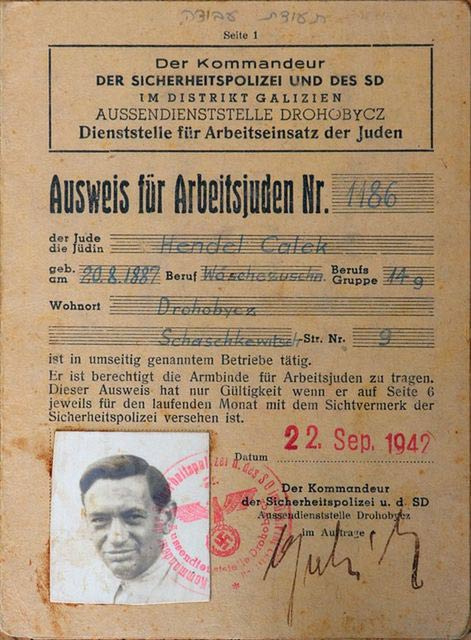
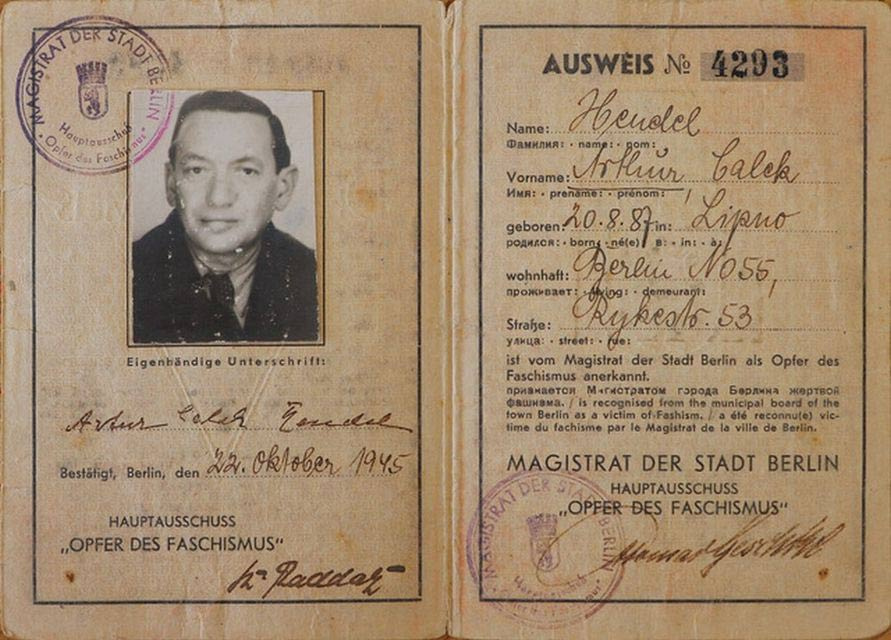
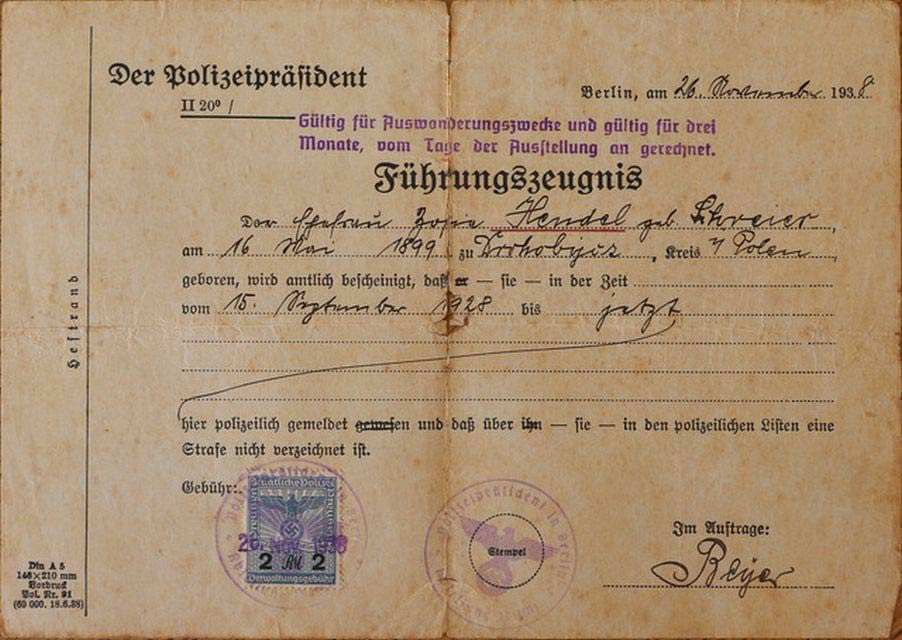
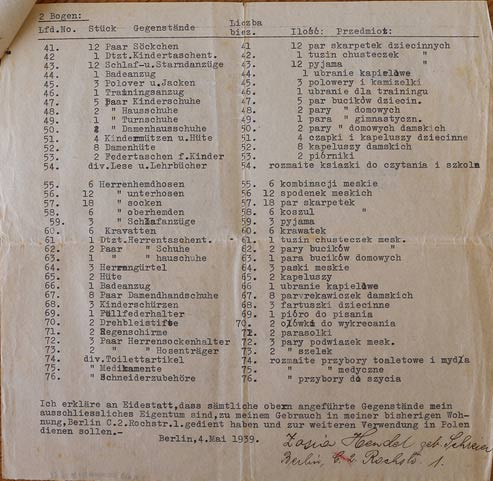
After their liberation, they returned to Berlin in September 1945 with a bag full of bacon as their only luggage. All their belongings had been destroyed during the bombing of Hamburg in 1944. Initially, the Jewish community sheltered them in a former Jewish school at the corner of Rykerstrasse and Oranienburgerstrasse.
Hadassa rejected everything German. After a year, she refused to attend school. She learned about a Jewish orphanage on Iranischenstrasse and the Aliyat Hanoar group, which facilitated emigration for children and young people. She joined the movement against her father's wishes. In 1946, she boarded a truck with other young people and traveled to Frankfurt am Main. From there, she went to Paris and Marseille, and finally took a ship to Palestine. During the journey, she met her future husband, Michael Wygodny. Hadassa settled in Modelet, a village in northern Palestine. In 1948, at the age of 19, she joined and fought with Plugot Hamachat’z, an elite unit of the Israeli independence movement. Artur and Zosia Hendel moved to a camp for displaced persons in Solstheim, Thuringia; he was chosen to serve as an arbitrator, while she worked as a librarian. In 1949, they both moved to the newly independent Israel and reunited with Hadassa. They settled in the Tel Aviv area. Artur resumed working as a tailor. Hadassa trained to become an accountant. She married Michael Wygodny in 1950, and they had two children. Artur died in 1972, and Zosia in 1989. In the 1990s, Hadassa and Michael moved to a retirement community. She passed away in Israel.